Jaye Lakhay: A Visually Daring Leap for Nepali Animation
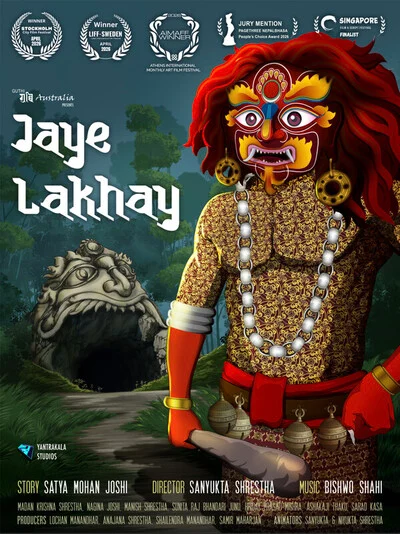
I finally got the chance to watch Jaye Lakhay at Ranjana Cineplex, and it was an experience I had been looking forward to.
There is something inherently admirable about Jaye Lakhay. Created by animator brothers Sanyukta and Niyukta Shrestha, with Sanyukta Shrestha directing and editing and the story by the late Satya Mohan Joshi, the film represents an extraordinary labour of love: eight years of work devoted to bringing a Nepali animated feature to the screen.
In an industry where animation is typically the product of large teams divided across specialised departments, such an undertaking is remarkable. Jaye Lakhay may not always achieve the technical polish of a large studio production, but its ambition is impossible to overlook.
The film’s greatest strength is undoubtedly its visual design. There are moments when Jaye Lakhay seems to leave the familiar world behind, creating images that feel dreamlike, otherworldly and distinctly its own. The artwork demonstrates a strong sense of imagination and visual identity, and the design is, at its best, genuinely impressive.
I approach the film with some understanding of what goes into producing animation. I spent three years at Titmouse Animation in Vancouver, working with teams that produced series for Netflix, Amazon and Disney+. In a professional animation pipeline, animation, build, layout and compositing are handled by different departments, each contributing to what ultimately appears as a few seconds of finished footage. Animation is painstaking work, and the demands multiply enormously when the ambition is a feature film.
That perspective makes the achievement of Sanyukta and Niyukta Shrestha all the more significant. The film does occasionally reveal limitations in the smoothness of its animation. The movement does not always possess the fluidity audiences have become accustomed to from high-budget animated features. But judging the film purely against that standard would be unfair. At 24 frames a second, animation demands an extraordinary amount of labour. Every second on screen represents dozens of individual frames, decisions and corrections. What the brothers have managed to accomplish over eight years deserves considerable respect.
The film’s soundscape, particularly its music, is another major strength. The percussion has a wonderful physicality, and the theatrical experience—especially in a Dolby Atmos environment—allows the music to make a strong impression. Sound in animation is often an under-appreciated craft. Unlike live-action cinema, where much of the sonic world can be captured during filming, animation requires the filmmakers to construct that world almost entirely from scratch: dialogue, Foley, ambience, effects and music.
The ambient sound could be improved, particularly in the way the dialogue is integrated into the environment. At times, the dialogue feels somewhat animatic and isolated, lacking the environmental sounds that would place the characters more convincingly within their surroundings. The dialogue mastering and final mix could also be refined to make the voices sound more natural and better integrated with the world of the film. A richer layer of ambience, combined with a more natural-sounding dialogue mix, could have added considerable depth and helped the film’s world feel more alive.
Where Jaye Lakhay struggles most, however, is not in its craft but in its storytelling.
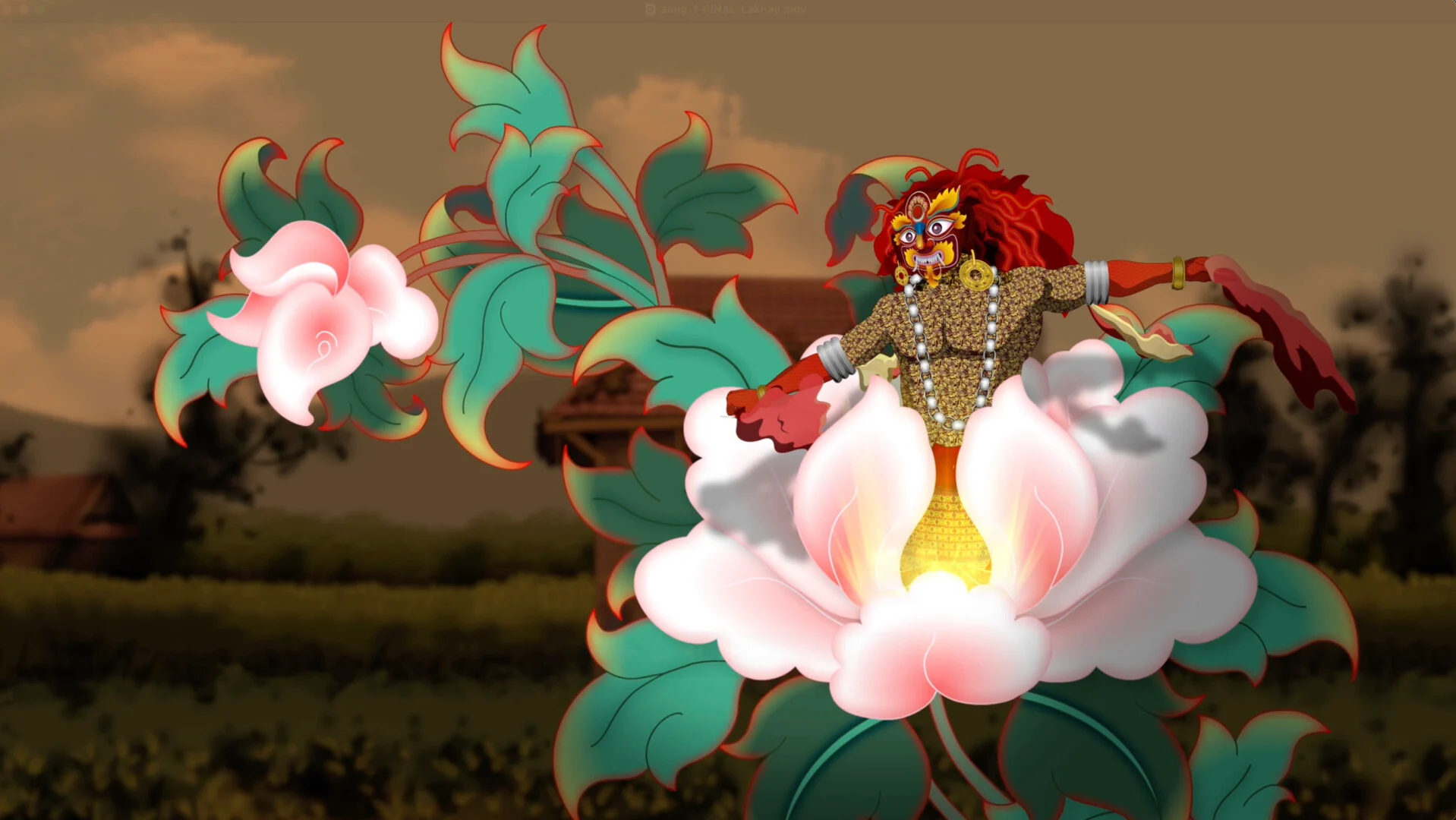
The film seems to lack a clearly defined dramatic engine. Its narrative occasionally feels scattered, and the film does not sufficiently establish who Lakhey is, what drives him, or why his journey should matter to us emotionally. This becomes particularly noticeable because the film contains the ingredients of a compelling romantic fantasy: the meeting of a beauty and a beast, two seemingly incompatible characters drawn towards one another.
Yet romance requires obstacles. It requires conflict.
The most compelling stories are driven by characters who want something but cannot easily have it. Their desires collide with external forces, internal fears or opposing characters. That conflict creates tension, and tension gives a narrative momentum. In Jaye Lakhay, the central relationship does not develop enough dramatic resistance to make the romance emotionally compelling. We see the ingredients of a love story, but not always the obstacles that would make us invest deeply in it.
This is ultimately the film’s greatest missed opportunity. Its visual imagination suggests a world rich with mythology, character and possibility, but the screenplay does not always give that world a sufficiently strong dramatic structure. The absence of a clearly escalating conflict leaves some of the film’s most beautiful moments feeling disconnected from a larger emotional arc.
And yet, Jaye Lakhay should be viewed in the context of what it represents.
Nepali animation is still developing its own language, infrastructure and audience. Against that backdrop, an animated feature created over eight years by two animator brothers is not a minor accomplishment. It is a statement of intent. The film demonstrates that there is both the ambition and the creative imagination to tell large-scale animated stories from Nepal.
Jaye Lakhay is therefore a film of contrasts: visually ambitious but narratively uneven; technically imperfect but creatively fearless; sonically powerful in its music but with opportunities to improve its atmospheric sound and dialogue integration. It does not yet have the polish of the world’s major animation studios, but perhaps that is not the most important measure of its success.
What matters is that Sanyukta and Niyukta Shrestha attempted something extraordinarily difficult—and, against considerable odds, brought it to the screen.
For that alone, Jaye Lakhay deserves a sincere thumbs up. It is not a perfect animated feature, but it is an important one: a bold, beautiful and ambitious step forward for Nepali animation.