
The Unsung Heroes of Nepali Cinema
The actors who quietly make our films better.

Photo Credit: Revolver Creative Company(Unsplash.com)
I have been meaning to write this for quite some time, but somehow kept putting it off. Perhaps the reason is that there are simply too many names I want to talk about, and choosing only a few feels unfair. But after watching so many Nepali films over the past several months, I have increasingly found myself paying attention to something that often gets overlooked when we talk about cinema: the supporting actors.
The Performance
This is my attempt to appreciate some of those actors in Nepali cinema. I obviously cannot write about everyone, but three performances from films I have watched recently immediately come to mind: Abhay Raj Baral in Jhingedau II (2026), Padam Tamang in Behuli (2026), and Manil Tamang in Karki Saila (2026).
01
Abhay Raj Baral
Jhingedau II · Maijharo · Lallibazar
One of the best supporting actors we have in Nepali cinema is undoubtedly Abhay Raj Baral. Whether it is Maijharo, Lallibazar or Jhingedau II, I have consistently been impressed by the way he gives life to the characters he plays. His performances never feel like an actor trying to demonstrate his acting ability. He simply inhabits the character. His characters feel as though they have lives beyond the scenes in which we see them.
Pankaj Tripathi can walk into a film and make you feel that his character has an entire life outside the screenplay. William H. Macy has a similar ability to make ordinary, flawed people feel extraordinarily specific. Sanjay Mishra can often make a relatively small role memorable simply through his timing and mannerisms.
Baral, in his own way, has that quality.
His characters have their own personality and rhythm, but they still feel organically connected to the world of the film. I don’t feel that he is simply there to support the lead.
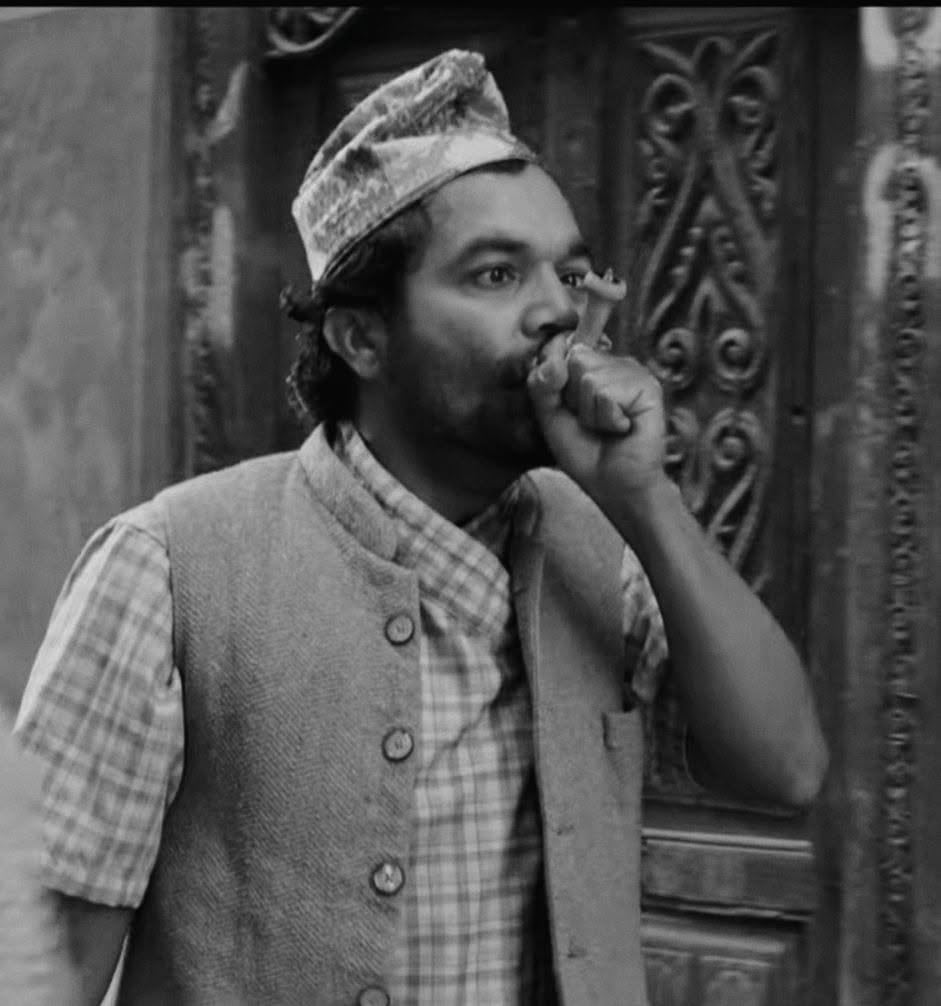
Photo Credit: Facebook Page
Sometimes they shine so brightly that you start waiting for them to return.
02
Padam Tamang
Behuli
Then there is Padam Tamang in Behuli.
Every time Tamang appeared on screen, I could hear laughter cracking across the theatre.
He is subtle, yet extremely impressive in his role. What I particularly enjoyed was that the humour never felt forced. His expressions, reactions, timing and presence seemed to do most of the work.
Honestly, I found him outshining the protagonists in the scenes they shared.
But that doesn’t mean the supporting actor has to disappear.
There is a wonderful tradition of this in Bollywood. Rajpal Yadav has repeatedly turned relatively small comic roles into characters audiences remember. Vijay Raaz has done the same in both comedy and drama. These actors don’t necessarily need to dominate a film to make an impression.
They simply need to arrive at the right moment and give the scene something the story needs.
Tamang does that.
And if I found myself noticing him more than I expected to, I consider that a compliment to his performance.

Photo Credit: Facebook Page
There is nothing flashy about it. And that is precisely why it works.
03
Manil Tamang
Karki Saila
For me, the best part of Karki Saila was Manil Tamang.
He is a co-actor in the film, but what impressed me most was the simplicity of his performance. There is no sense that he is trying to steal the scene. There is no feeling that he is trying to prove to the audience that he can act.
He simply plays the character. And sometimes that is much harder than it sounds. We often associate great acting with big emotional scenes, dramatic speeches, tears, shouting, or obvious displays of technique. But some of the most effective actors know exactly when not to do too much.
This is something we see frequently with character actors in both Bollywood and Hollywood. Pankaj Tripathi, Neena Gupta, Sanjay Mishra and Stanley Tucci, for example, can often make a character memorable through restraint rather than exaggeration.
Manil Tamang reminded me of that.
His performance feels grounded. He doesn’t appear to be performing for us; he feels like someone who belongs in the world of Karki Saila.
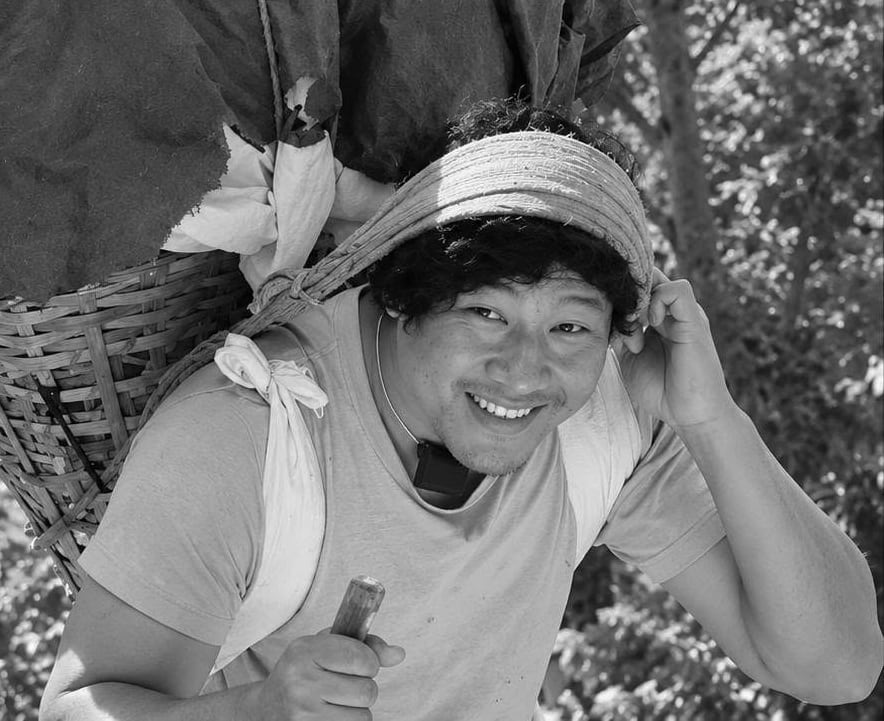
Photo Credit: Facebook Page
And sometimes, your job is to quietly steal the scene.
The People Standing Beside the Hero
Perhaps this is what I have come to appreciate most about supporting actors. They make the world around the protagonist feel alive.
Someone has to be the friend. The brother. The neighbour. The colleague. The comic relief. The rival. The confidant. The person who walks into a scene and changes its energy.
These characters may not drive the entire story, but they give the story texture. Remove them, and suddenly the protagonist is standing in an empty world.
That is why I find the tradition of character actors in Bollywood and Hollywood so fascinating. Their careers remind us that there is another way of being important in cinema. You don’t always need to be the person carrying the story.
Sometimes your job is to make everyone around you more believable. Sometimes your job is to make the audience laugh at exactly the right moment. Sometimes your job is simply to make a two-minute scene unforgettable.
Sometimes, the people standing beside the hero are the ones who make the entire world around that hero come alive.
I think Nepali cinema has many actors capable of doing exactly this. Perhaps we simply don’t talk about them enough.
We celebrate the stars because they are the faces of our films. That is understandable. But there are performers working quietly around them who bring enormous personality and authenticity to the stories we watch.
And one of the pleasures of watching a lot of films is discovering these actors. You see someone in one film. Then you see them in another. Then another.
Eventually, you start recognizing them before the character has even said a line.
Oh, I know this actor.
That is how a relationship between a character actor and an audience begins.
I want to see more of that in Nepali cinema. I want to know these actors. I want to recognize them. I want to see them move from one character to another and discover what else they can do. Because being a supporting actor shouldn’t mean being invisible.
A Little Applause
This is not meant to be a definitive list of the best supporting actors in Nepali cinema. It is simply an appreciation of three performances that have stayed with me.
Padam Tamang made me laugh in Behuli. Abhay Raj Baral continues to impress me with the characters he inhabits. Manil Tamang brought a simplicity to Karki Saila that I found particularly memorable.
There are many more actors I could have included, and I am sure I will discover many more as I continue watching Nepali films. This is perhaps just the beginning.
For now, though, I wanted to give these three their moment. We often celebrate the people standing at the centre of the frame. Perhaps it is time we also looked at the people standing beside them.
Because cinema isn’t made only by the heroes.
So here is to Abhay Raj Baral, Padam Tamang, and Manil Tamang—and to all those actors who quietly make our films better without always receiving the recognition they deserve.
Here is to the unsung heroes of Nepali cinema.